
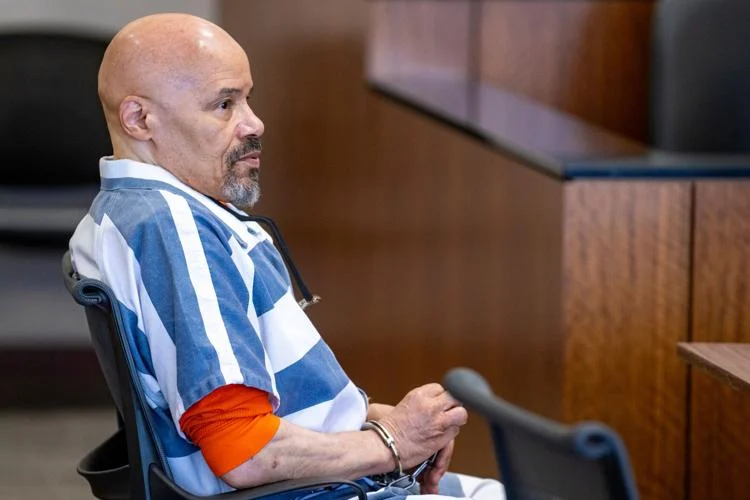

A Utah man who spent 41 years facing execution for a 1985 murder has been granted bail after new DNA testing ruled him out as a match to biological evidence from the crime scene.
Douglas Stewart Carter, now 71, was convicted of killing Eva Olesen and sentenced to death in the same year.
A judge has now ordered his release as prosecutors continue reviewing the case following the latest forensic findings.
Olesen, who was both shot and stabbed, was the aunt of the Provo police chief at the time of her death.
Carter has always denied killing her. His conviction rested largely on a confession he later described as forced, along with evidence from two witnesses who claimed he had boasted about the killing.
Investigators did not have physical evidence directly tying Carter to the crime scene when he was convicted.
The case remained in the courts for decades.
In 2011, attorneys located the two key witnesses in Mexico. Their accounts had changed significantly.
They reportedly told authorities that they had falsely implicated Carter and alleged that police had offered them money and gifts. They also said officers threatened them and a family member with deportation if they refused to testify against him.
The revelations eventually contributed to a major legal breakthrough.
In 2025, the Utah Supreme Court ordered a new trial after finding multiple instances of intentional misconduct involving investigators and a prosecutor.
That decision opened the door for fresh examination of evidence from the original investigation.
The DNA testing produced a result that prosecutors said did not support Carter’s conviction.
According to Utah County prosecutors, testing completed this month excluded Carter as a possible contributor to blood found on a doorknob. His DNA was also excluded from genetic material recovered from the handle of the knife used in the attack.
Prosecutors told the court that the results made it appropriate to reconsider Carter’s continued detention while the state examines the remaining evidence.
A retrial had previously been scheduled for 2027. Prosecutors have since withdrawn their notice indicating that they would pursue the death penalty.
Carter’s lawyer, Neal Hamilton, said his client faces a difficult adjustment after spending more than four decades behind bars.
Carter is expected to live in an extended-stay facility near his son’s family. His son was adopted as a baby and only discovered the details of his father’s conviction much later.
Hamilton said Carter would also require therapy to address the psychological impact of his lengthy incarceration.
Carter was living with his mother in Utah when Olesen was killed on February 27, 1985.
Authorities eventually identified him as a suspect in what they believed was a robbery-related killing.
Carter left Utah several weeks later after believing police were investigating him in connection with another assault. He was arrested in Nashville, Tennessee, in June 1985.
During questioning by a Provo detective, Carter signed a confession. He later maintained that repeated threats from police had caused him to falsely confess.
He was convicted at trial, where the defence did not call any witnesses, and received a second death sentence after a retrial in 1992.
His repeated appeals continued for years.
The latest DNA findings have now created a significant new development in a case that has followed Carter for most of his adult life.
Prosecutors have not disclosed whether investigators will use the DNA evidence to identify or pursue other possible suspects.
SHARE…