
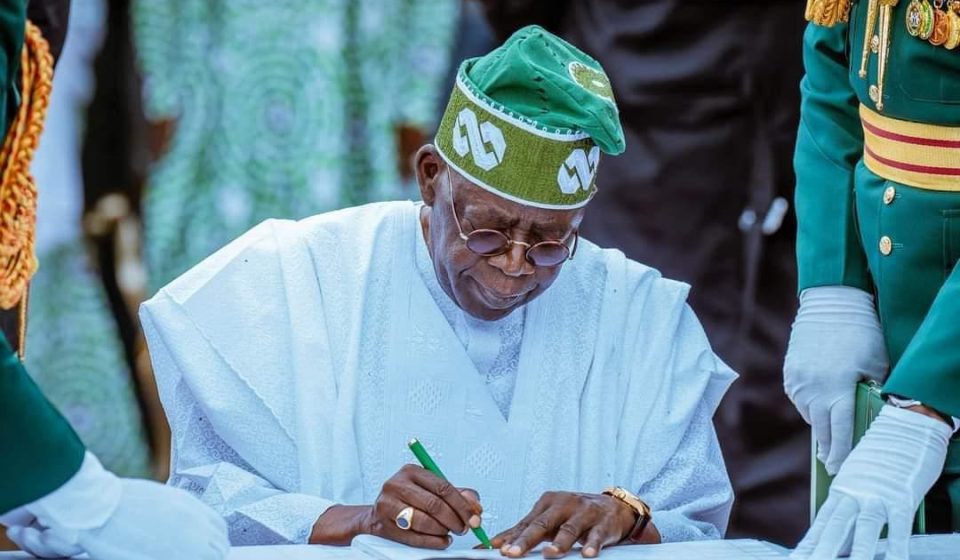

President Bola Tinubu has acknowledged the financial pressure facing millions of Nigerians, saying many families still struggle to pay for food, school, healthcare and transportation.
The President made the admission on Thursday during his Independence Day address to the nation as Nigeria marked 66 years of independence.
Tinubu said the government was aware that many citizens could not afford to wait indefinitely for the benefits of its economic reforms.
He argued that the difficulties facing households did not start with his administration. Instead, he attributed them to years of weak productivity, poor infrastructure, limited economic opportunities and institutions that failed to adequately support vulnerable Nigerians.
“Some Nigerian families still struggle today for the next meal, the next school fee, the next medical bill, or simply enough money to get to work,” the President said.
Despite pointing to the long-standing nature of the problem, Tinubu acknowledged that his administration must play a role in changing the situation.
He said four years would not be enough to erase problems that had accumulated over generations. However, he maintained that the government could put Nigeria on a different economic path and steadily reduce poverty.
To support vulnerable citizens, Tinubu said his administration was strengthening direct assistance programmes and updating the National Social Register.
He also mentioned the Nigerian Education Loan Fund, which he said was helping students from poorer families continue their education despite financial difficulties.
Another initiative highlighted by the President was the Consumer Credit Corporation, CREDICORP. He said it was helping working Nigerians gain access to essential assets such as vehicles, solar systems and digital devices.
Tinubu stressed, however, that government support programmes should only serve as temporary assistance rather than become a substitute for prosperity.
“Our objective is not to manage poverty more efficiently. We will defeat it,” he declared.
According to the President, achieving that goal will require sustained economic growth, discipline and the creation of millions of productive jobs.
He identified the cost of living as one of the major issues his administration intends to tackle in the next phase.
Tinubu said the government would work to increase agricultural output while improving access to seeds, fertiliser, irrigation and modern farming equipment.
He also pointed to investments in roads, railways, ports, storage facilities and transportation networks as measures that could reduce the cost of moving food and other goods.
The President explained that lower production and transportation costs should eventually translate into cheaper goods for consumers.
Job creation also featured prominently in his address.
Tinubu said Nigeria’s youthful population could become a major economic advantage if young people had access to productive opportunities.
He said the government would therefore focus on industrial development, digital connectivity, skills training and support for businesses.
The President also said economic success should not be judged only by figures such as GDP growth or other macroeconomic indicators.
For him, the real test would be whether ordinary Nigerians could afford necessities, find decent opportunities and look towards the future with greater confidence.
Tinubu’s remarks come after his administration repeatedly defended its economic reforms as necessary measures to address structural problems in the Nigerian economy.
The President acknowledged that the reforms had created significant pressure for families and businesses but maintained that the economy was moving towards greater stability.
His latest Independence Day address placed renewed emphasis on ensuring that any economic gains eventually translate into better living conditions for Nigerians.
Tinubu said the ultimate goal was to build an economy that could continuously lift people out of poverty while creating opportunities for Nigerians across different sectors.
SHARE…