
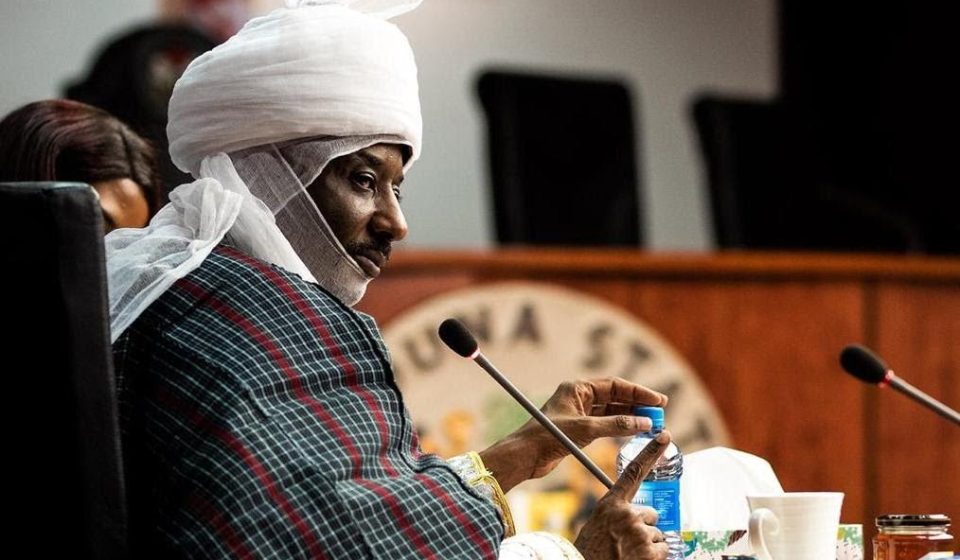

The Emir of Kano, Muhammadu Sanusi II, has questioned the extent to which political influence may affect the enforcement of Nigeria’s anti-corruption laws.
Speaking during an interview with Channels Television in Lagos, Sanusi said the country already had laws, courts and institutions capable of investigating and prosecuting corruption cases.
However, he argued that having the laws in place was not enough if the institutions responsible for enforcing them did not operate effectively.
According to the Emir, political connections can sometimes influence the way corruption allegations are handled.
He claimed that there have been instances where individuals facing corruption charges had their cases dropped because of their political affiliations or access to influential supporters.
Sanusi also raised concerns about the use of legal proceedings in politically sensitive cases.
He cited the case involving former Kaduna State Governor Nasir El-Rufai, saying his detention and ongoing legal battles had prompted questions about whether some proceedings were being driven by political considerations.
El-Rufai is facing corruption-related proceedings over allegations linked to his tenure as Kaduna governor. He has denied the allegations. In April 2026, a Federal High Court granted him bail in the corruption case, although other legal proceedings involving him have continued.
Sanusi said situations involving politically prominent figures could make Nigerians question the motive behind some corruption prosecutions.
He asked whether such cases were being pursued strictly as part of efforts to fight corruption or whether political interests could also be involved.
The Emir stressed that politicians, public officials and members of the judiciary must ensure that existing laws are applied for the purposes for which they were created.
For Sanusi, changing legislation alone would not resolve the country’s corruption problems.
He said greater attention should also be directed towards the institutions responsible for investigating offences, prosecuting suspects and administering justice.
The monarch maintained that stronger institutions and consistent enforcement would be necessary to achieve meaningful progress in the fight against corruption.
He concluded by warning that when laws are not applied consistently, Nigerians may develop the perception that people with sufficient political connections can avoid accountability.
SHARE…